

Double Trouble
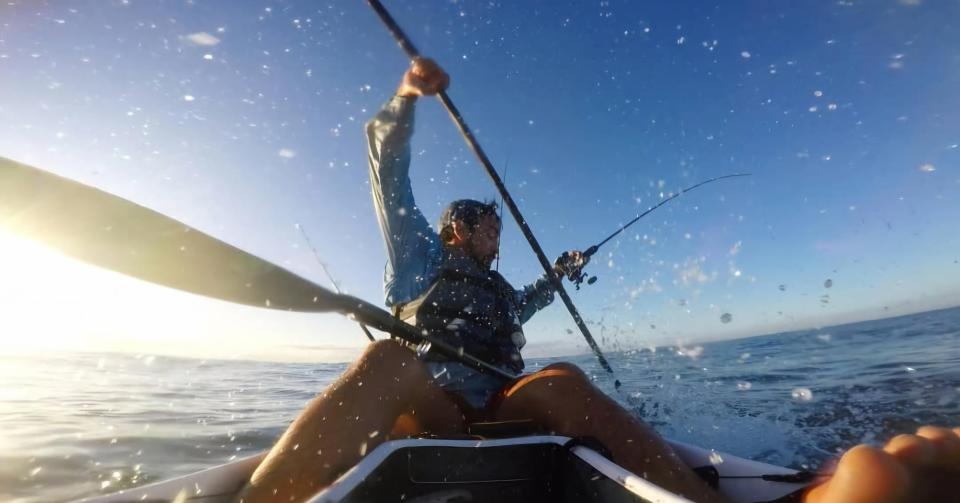
Everyone knows the common refrain- Men can’t multi task.
My response to anyone who has ever said that,would be to witness the speed and clarity of thought that the average Natal kayak fisherman is suddenly blessed with, on the occasion of a double-strike. Suddenly muscles and geometry skills get used that have rarely seen the light of day since Grade 9 rugby fixtures.
Even with this electric display of attention, it’s just a fact of the matter that to land 2 or more fish in a single strike action is extremely challenging. A huge amount of the strikes result in lost, popped off or taxed fish. There is even the dreaded and depressing prospect of losing BOTH your fish.
That might be part of the reason that a lot of anglers, especially on the kayak, prefer to avoid the stress and tangles of the double-up, and sometimes even go as far as cutting a second fish off to land the first. But, it’s also maybe for this same reason that fighting and landing both fish in a situation like this, is arguably one of the most exciting situations you’ll face on your vessel.
Good Housekeeping
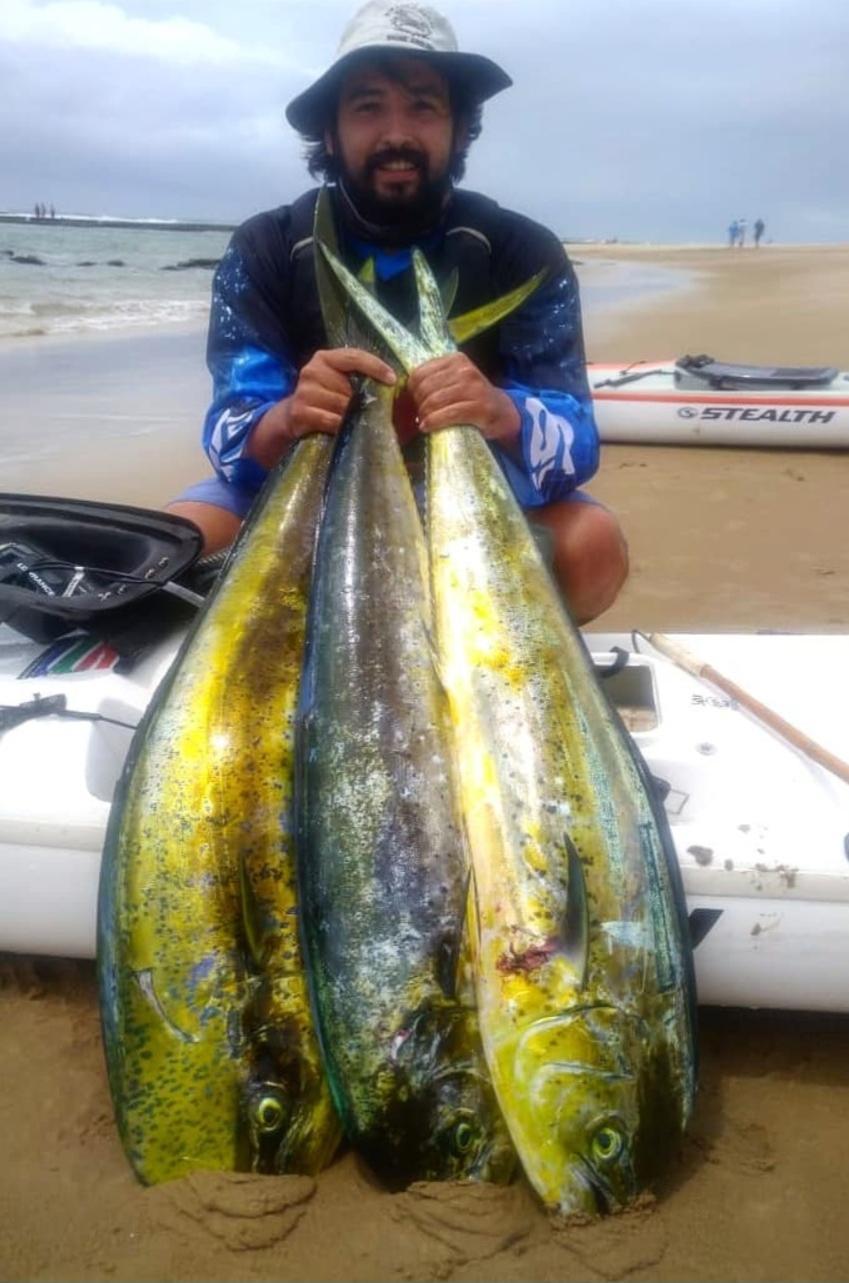
The surest way to lose a double up is to be messy on deck. Everyone has a story about how their two dorries vanished into smoke around a bait torpedo not clipped on properly, or the trophy tuna that burned off on a hanging yazuri, or the croc that gave one last kick and got away because your gaff wasn’t at hand in a messy hatch. All it takes is 5 seconds to do a bit of housekeeping, so do it as often as possible. When a double up or even a single strike happens and you actually do have to react quickly, you won’t have added 10 other issues to your plate.
Tackle up
One of the most common things to hear/see happening when an angler goes two-up is worrying about one fish spooling a reel. The feeling of panic, as you look over your shoulder, and see the drum wind down is real! It also almost always results in tightening the reel behind you to alleviate the lines speedy disappearance . That usually ends in a sickening feeling as one, or both of your fish come loose, when something pops under the huge amount of drag and pressure.
The trick nowadays is to spool your multiplier reels backing with as much braid as possible. With that peace of mind you know you have far more leeway and drag to play with knowing you won’t get spooled. With a bit more room to deal with 2 fish going in different directions you also don’t have to make instant decisions that cost you a fish. When fishing livebait, I also like to have at least one rig have a circle hook. You can be almost sure this will hold, and you can leave this rod to be dealt with last - more on this later. Otherwise, your usual tackle is pretty much the same.
Fishing for the double up
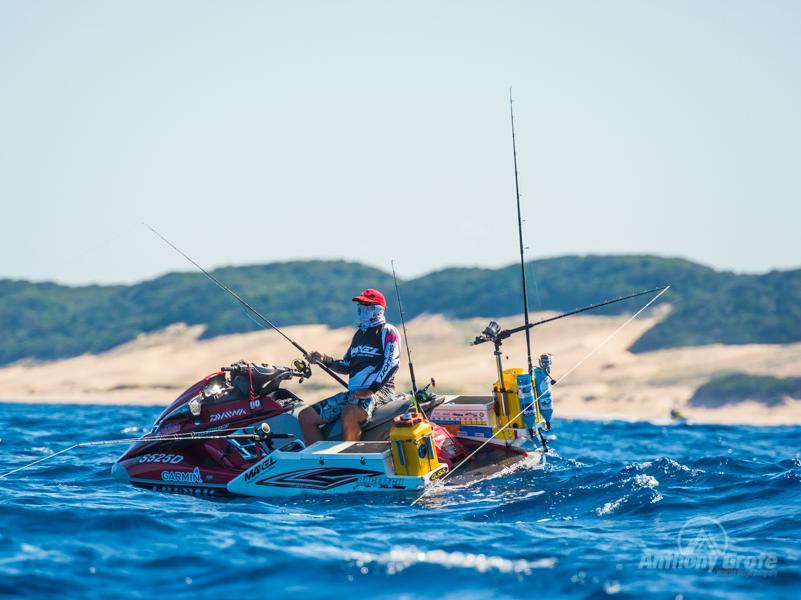
There are a few ways you can aim for double-up’s across the species ranges. The most obvious being to have as many lines in the water at all times. This means AT ALL TIMES. Picture a common scenario. Early winter North of Durban, and one of the early morning brigade’s reels goes off with a fish. The common reaction you see is the angler in question reaching around to his other rod and whipping the bait in at a frantic speed. Fish swim closely in shoals and you can be assured that the tuna/snoek/garrick screaming off away from you is not usually alone. The angler’s second bait is now sitting within a metre of his ski. It’s not doing its job in finding the other members of the shoal that are in the general area, keyed up and hungry.
The lesson here is not to bring the second line in. You want to clear it free from obstructions in your rod holder area if the fish changes direction and swings the line across your backdeck. Make sure it is then running freely behind you. Take your time and stress less- give it at least a few minutes out during the fight. When the fish is a bit closer and tangling up to your bait is getting risky, then bring it in. Whether it’s a snoek fillet, a walla or a live mozzie, you now have a bait targeting the rest of the shoal and your double-up chances suddenly go up.
This applies as well when pulling at speed. Don’t just stop when your fillet or lure goes off. You are not going to get spooled or pull hooks on the right drag. Give it at least 10-30m more of paddling, and you will very often see the rest of the shoal trying to wipe out the remaining bait target. If it doesn’t get hit straight away, again, don’t bring it straight in. Once you see the size, and amount of the fish taken on barely moving lures you’ll want it out there for as long as possible. If you’re getting results on a particular lure, adding another to the spread can also improve your chances.
On a recent trip to Cape Town, I was struck by how the focus during a hookup was to get as many more baits in the water, and how that action almost always resulted in multiple fish. It definitely works. So, if you don’t already have a second bait in the water, and are feeling confident, you can try to flick out/let out a second bait for the fight. This is something that is especially effective for Dorado during summer. It doesn’t even have to go far, but just needs to be let out a short distance, and will often be quickly picked up. The tactic from Cape Town of throwing chunks out upon hookup to hold the fish in the area is also something I see working in Durban.
Another approach that usually results in a stunning amount of tangles and mess when donebadly, but can be very effective when done well (just ask Markus Potgieter). This is to throw out whatever is on the spinning gear when a strike happens. A quick cast into the hookup area with a spoon or popper often results in a spectacular strike- just try to watch your skis movements on the water so you don’t end up across your own lines. Just note that three lines can be very challenging to manage on your own and this maximises the chance of something going wrong.
Fighting them both
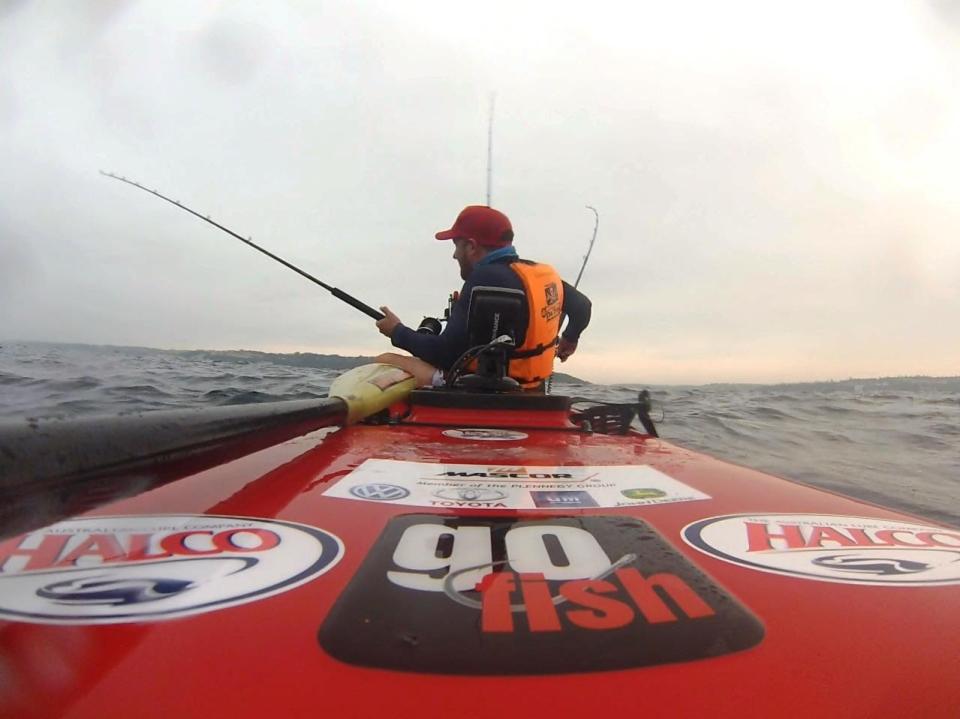
So you’ve now got 2 fish on your plate and it’s chaos on your kayak as they scream off. Some people might disagree, but my personal rule for fighting a double up is to focus on one at a time. I think aside from a bit of shuffling rods, and occasionally clearing lines, you shouldn’t chop and change between the 2 rods as this usually results in some sort of disaster. I would try to do a bit of an initial sorting out of rods to get the lines clear, and then try to decide which rod to focus on as necessary. It’s important not to panic and grab the first rod at hand but rather to make a conscious effort to think for 5 seconds and sort thing’s out properly. Some guys like to start with the rod that has the ‘better hookup’ - e.g. a circle hook, stronger wire or a surface bait with no sinker to sort out. This works well in increasing the chances of landing at least one fish but your chances of landing both go down. If you’re willing to take the risk and increase the chances of reward, rather start with the weaker hookup first then move onto the stronger one. That better hook-up gives you more chance of your second fish not achieving a long line release.
Don’t worry about the fish that stays far out in the other direction.- the tension of the line in the water is more than enough to maintain the hookup. It’s the one that is running with you or crossing your other lines and rods behind you that is an issue. I think the best bet here is to still not to fight that rod but rather to watch it, and move it around the rod holders as is necessary. Keep a proactive eye out on where your lines are heading. If you are so focused on the one fish that you let the other get tangled up, it will often be too late to sort out by the time you notice it.
You’ll also probably have other anglers around you, who will most likely want to get as close
to you as possible to try and get into the action. Clear and firm communication is fine but no-one likes a frantic, raging paddler so just calmly let everyone who approaches know where your lines are until you get into free water. If you’re on a social mark like the Fontao, general chirps to the watching crowd about their inability to hookup are compulsory. Just be prepared for the resulting slating you’ll get if you lose your fish. Once you’re clear and settled into fighting the fish, try getting that one in as quickly as possible before switching attention to the other rod. When gaffing the first fish, also make sure to keep a tidy deck. When you reach for your gaff again and it’s now under a 25kg tuna, you’ll see the reason for this. Make sure all the tools you need (pliers, gaff, knife etc) are at hand for the next fight. Mr.Rod Holder has fought the fish for this long, he can handle
another 30secs before you take over.
No matter how you approach them or prepare for them, getting a double-up is uncommon on a small fishing craft and can always go pear shaped for any number of reasons. You kind of just need to accept this the moment the fight starts- the odds are not always in your favour. However if you do follow these tips, A double-up on your kayak (or jetski, or skiboat) can be turned from a white knuckle ride full of pitfalls to a relatively smooth, but definitely fun, experience. Given a bit of preparation, and a change to your approach, you can get your landing rate up, aim for the double-up in certain situations and in general stop tearing your hair out when it all goes south.


